上新桥壶
Shàng Xīn Qiáo Hú
Pages 287-288
详细描述 Description
中文 Chinese
“春水外于天 ,夯船听雨眼
巨代前蜀诗人韦庄笔下的江南
的桥 ,桥下的船 船上的人
来文人上又客无数过往, 水乡的及
如此幽静安详 ,又是那般愁肠万千 。千百入
水乡,一幅淡淡的水墨 : 水乡的十 ,雨中
加
和境是一个永恒而复杂的话题 。
顾景舟的“上新桥过”也在描画着他身边的江南水乡,但却有着别样
的情感和意境 。
行业受到冲击 ,几近瘫痪 。 但就是
术上的创作 ,“上新桥索”
“上新桥过”以江南水乡的桥
把这座桥安置在了整个志盖中央的
用宽边方式,号简的肩部让出了一
边的内外两回, 加上肩线和身简的
内往外 ,肆意荡澜
更妙的是欣上
近,驶向水中的桥劳 -. 整个壶体色泽莹涧,健硕气畅,给
20 世纪六七十年代 ,“文化大革命”疾风暴雨 ,宜兴紫砂
在这动荡的岁月 顾景舟仍然没有放弃艺
就是这一时期为工厂生产的“打样”之作
作为设计的主题 , 用桥钮的方式来体现 ,
最高点 ,成为整个壶的视觉焦点 。索盖采
阁人饱满的肩线 ,从壶的顶部下看 ,壶盖宽
两癌 , 犹如桥下的水波涟洲,一图一癌由
设计了一个扳指,形似一叶局舟,, 出远及
别样的气息
从意境上看 .“上新桥壶”通过简单的具象形制 ,柄合紫砂朴素的表面山
理特征 ,展现出江南水乡的恬葵与优美,无声的律动荡澜在每个观者的心头
从功能上讲 “上新桥索”的容量较大 ,轰部扳指的处理使于单手持拿 ,
而桥钮上宽下宰 ,同样便
-索盖的
从富意上说 ,“上新桥壶”以桥成形 ,|/
跨桥而过,逝去的是烦恼和过往 ,
拿捏 , 这者反映了创作者的一番心思
桥立意,可以想象 : 拾阶而上 、
迎接的是美好和未来
English
# Shangxin Bridge Teapot
"Spring waters stretch beyond the sky, listening to rain from a moored boat with sleepy eyes."
In the writings of Wei Zhuang, a poet from the Former Shu during the Five Dynasties period, the Jiangnan water towns—with their bridges, the boats beneath the bridges, and the people on the boats—have witnessed countless literati and travelers passing through over the ages. The water towns are so tranquil and serene, yet filled with endless melancholy. For thousands of years, the water towns have been like a faint ink wash painting: the bridges of the water towns, the rain-soaked scenery—境 (境, meaning "realm" or "境界") is an eternal and complex topic.
Gu Jingzhou's "Shangxin Bridge Teapot" also depicts the Jiangnan water town around him, but with a distinctive emotional quality and artistic conception.
During the 1960s and 70s, the "Cultural Revolution" swept through like a violent storm, and the Yixing purple clay industry was severely impacted, nearly paralyzed. Yet even in these turbulent years, Gu Jingzhou never abandoned his artistic creation. The "Shangxin Bridge Teapot" was a "prototype" piece created for factory production during this period.
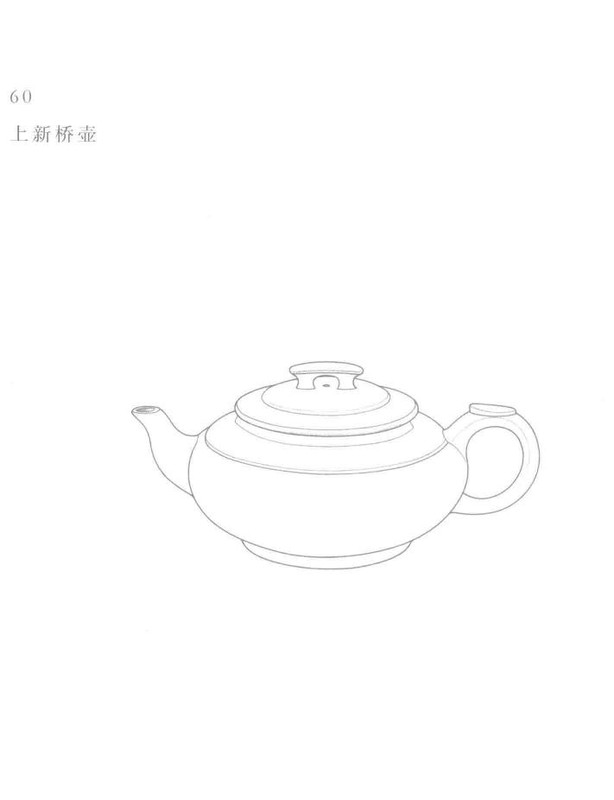
The "Shangxin Bridge Teapot" takes the bridges of Jiangnan water towns as its design theme, expressing this through the bridge-shaped knob. The bridge is positioned at the highest point in the center of the entire teapot lid, becoming the visual focal point of the whole piece. The teapot lid employs a wide-rim style; the shoulder of the body yields a full, rounded shoulder line. Viewed from the top of the teapot, the wide rim of the lid creates inner and outer rings on both sides, which, together with the shoulder line and the body's contours, resemble rippling water waves beneath a bridge—circle upon circle, rippling outward from inside to outside with unrestrained freedom.
Even more ingenious is the handle design: a thumb rest shaped like a small leaf boat, approaching from afar and sailing toward the bridge in the water. The entire teapot body has a lustrous, smooth color and a robust, flowing spirit, giving it a distinctive character.
From the perspective of artistic conception, the "Shangxin Bridge Teapot" uses simple figurative forms combined with the plain surface texture characteristics of purple clay to present the tranquility and elegance of Jiangnan water towns. A silent rhythm ripples in the heart of every observer.
From a functional standpoint, the "Shangxin Bridge Teapot" has a relatively large capacity. The thumb rest on the handle facilitates single-handed holding, while the bridge knob—wider at the top and narrower at the bottom—is similarly easy to grasp. These details reflect the creator's thoughtful consideration.
In terms of symbolism, the "Shangxin Bridge Teapot" takes the form of a bridge and establishes its concept through the bridge. One can imagine: ascending the steps and crossing the bridge, what passes away are troubles and the past; what arrives is beauty and the future.