瓢瓜壶
Piáo Guā Hú
Pages 157-158
详细描述 Description
中文 Chinese
艺术源于自然, 并高于自然 。静爪壶造型来源于短柄圆腹的“球葫芦",
明李时珍《本草纲目. 菜部 》对萌芦科作分类 :“略之一头有腹 ,长柄者为
巧氢 ; 无柄而圆大形扇者为她 。”瘾是一种圆扁腹形 、无柄的葫芦 。东汉
《神农本草经 果菜部下品 》:“苦略,味苦,寒…… ”
狗瓜作为一种盛器,在生活中使用极为普凯 ,其造型和材质受到人们
的喜爱和关注 。明未曾出现一种特殊的工艺品地器,并一度在宫廷和民间流
行 。清初紫砂工艺繁业发展 . 造型推陈出新,闻瓜造型也引入紫砂造型设计
中来 清陈曼生曾在瑶瓜壶上留铭 :“饮之吉, 轨瓜无匹。”,
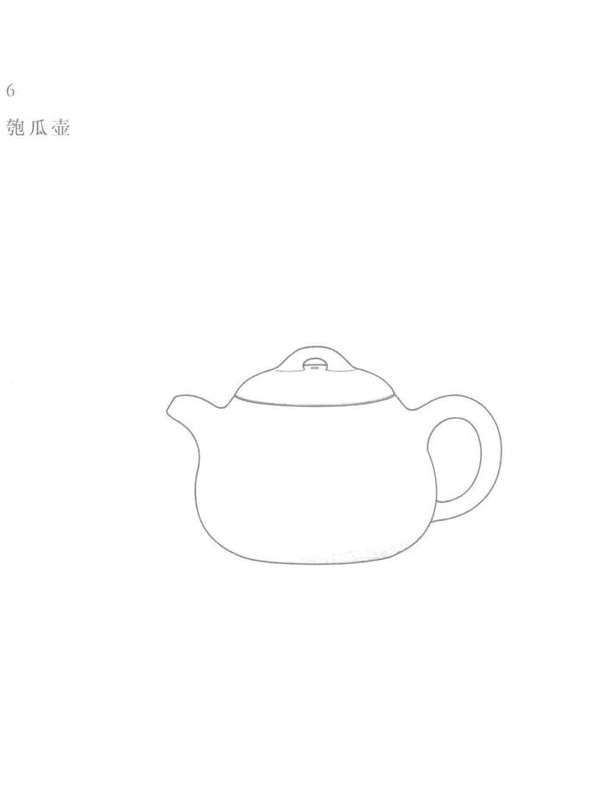
顾景舟的“静瓜壶”由纯净紫泥制成,色调牙和润泽 ,呈下大上小鼓
腹状,沉稳匀静,线条流畅,过滤自然,口盖鹤面拒合无缝隙 。此过整体造
型古朴、浑圆 、雅致,万饮敬把玩的佳器 。
1 王建民著 :《陈曼生研究 》 杭州 : 西冷印社出版社,2011 年11 月版,第 168页
化
神
English
# Art Originates from Nature and Transcends Nature
The Jingua teapot's form derives from the "ball gourd" with its short handle and round belly. In the Ming Dynasty, Li Shizhen's *Compendium of Materia Medica: Vegetable Section* classified the Cucurbitaceae family: "Those with a slender head and belly, with a long handle, are called hugua; those without a handle, round and large in flat fan shape, are called bo." Bo is a type of gourd with a round, flat belly and no handle. The Eastern Han *Divine Farmer's Materia Medica: Fruits and Vegetables, Lower Grade* states: "Bitter gourd, bitter in taste, cold in nature..."
As a type of container, the gourd was extremely common in daily life, and its form and material were beloved and valued by people. In the late Ming Dynasty, a special craft emerged—gourd vessels—which became popular for a time in both the imperial court and among the common people. In the early Qing Dynasty, the Yixing purple clay craft flourished and developed, with forms constantly innovating. The gourd shape was also introduced into purple clay design. Chen Mansheng of the Qing Dynasty once inscribed on a Yaogua teapot: "Drinking from it is auspicious; the gourd vessel is matchless."
Gu Jingzhou's "Jingua teapot" is made from pure purple clay, with a harmonious and lustrous color tone. It takes the form of a drum-bellied shape, larger at the bottom and smaller at the top, stable and serene, with flowing lines and natural transitions. The mouth and lid fit seamlessly together without gaps. The overall form of this teapot is simple, rounded, and elegant—a fine vessel for tea drinking and appreciation.
---
[1] Wang Jianmin, *Research on Chen Mansheng* (Hangzhou: Xiling Seal Engravers' Society Press, November 2011 edition), p. 168.