Chapter 3
达变
Adaptation
86
of 659
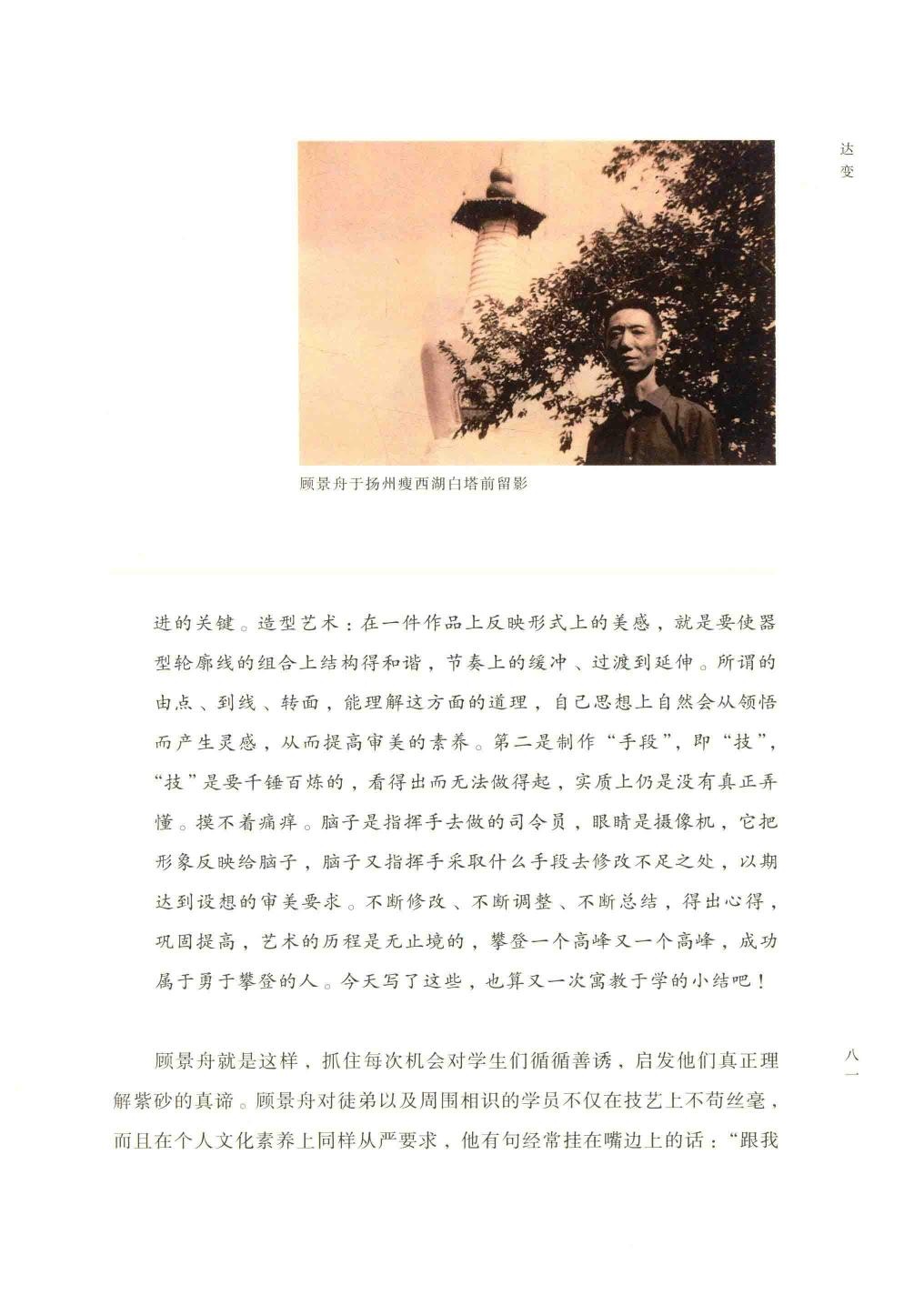
English Translation
The key to advancement. Sculptural art: to reflect formal beauty in a work is to harmonize the structural combination of the vessel's contour lines, with rhythmic buffering, transitioning, and extending. The so-called progression from point to line to surface—if one can understand the principles in this regard, one's mind will naturally produce inspiration through comprehension, thereby elevating one's aesthetic cultivation. The second is the "means" of creation, that is, "technique." "Technique" requires a thousand refinements and a hundred temperings. If something can be seen but cannot be executed, in essence one has still not truly grasped or understood it—one cannot get to the heart of the matter. The mind is the commander that directs the hands in their work; the eyes are the camera that reflects images to the mind, and the mind in turn directs the hands on what means to employ to correct deficiencies, in order to achieve the envisioned aesthetic requirements. Through constant revision, constant adjustment, and constant summarization, one gains insights and consolidates improvements. The artistic journey is endless—climbing one peak after another. Success belongs to those who dare to climb. What I have written today can also be considered another small summary of teaching through learning!
This was Gu Jingzhou's way: seizing every opportunity to patiently guide his students, inspiring them to truly understand the authentic essence of zisha pottery. Gu Jingzhou was not only uncompromising in technical matters with his disciples and the students around him, but equally strict in his demands regarding personal cultural cultivation. He had a phrase that was constantly on his lips: "Those who follow me..."
Chapter 3
达变
Adaptation
Pages 32-133
View Chapter →
English Translation
The key to advancement. Sculptural art: to reflect formal beauty in a work is to harmonize the structural combination of the vessel's contour lines, with rhythmic buffering, transitioning, and extending. The so-called progression from point to line to surface—if one can understand the principles in this regard, one's mind will naturally produce inspiration through comprehension, thereby elevating one's aesthetic cultivation. The second is the "means" of creation, that is, "technique." "Technique" requires a thousand refinements and a hundred temperings. If something can be seen but cannot be executed, in essence one has still not truly grasped or understood it—one cannot get to the heart of the matter. The mind is the commander that directs the hands in their work; the eyes are the camera that reflects images to the mind, and the mind in turn directs the hands on what means to employ to correct deficiencies, in order to achieve the envisioned aesthetic requirements. Through constant revision, constant adjustment, and constant summarization, one gains insights and consolidates improvements. The artistic journey is endless—climbing one peak after another. Success belongs to those who dare to climb. What I have written today can also be considered another small summary of teaching through learning!
This was Gu Jingzhou's way: seizing every opportunity to patiently guide his students, inspiring them to truly understand the authentic essence of zisha pottery. Gu Jingzhou was not only uncompromising in technical matters with his disciples and the students around him, but equally strict in his demands regarding personal cultural cultivation. He had a phrase that was constantly on his lips: "Those who follow me..."
章节导航 Chapter Navigation
Chapter 1
序文
Pages 6-6
Chapter 2
引言
Pages 28-31
Chapter 3
达变
Pages 32-133
Chapter 3
开宗立派
Pages 46-66
Chapter 3
传道授业
Pages 67-98
Chapter 3
大师淳友
Pages 99-120
Chapter 3
学艺谋生
Pages 121-133
Chapter 4
化神
Pages 134-141
Chapter 5
独妙
Pages 142-405
Chapter 5
匠心独运 不苟丝毫
Pages 142-179
Chapter 5
器利善事 物尽其用
Pages 180-199
Chapter 5
紫泥春华 研精究微
Pages 200-405
Chapter 6
驾简
Pages 406-427
Chapter 6
精雕细刻 文质合一
Pages 406-410
Chapter 6
师法自然 妙趣横生
Pages 411-415
Chapter 6
丝来线去 曲尽其妙
Pages 416-427
Chapter 7
明志
Pages 463-485
Chapter 7
高山仰止 淡泊明志
Pages 463-472
Chapter 7
啜墨看茶 气定神闲
Pages 473-478
Chapter 7
齿少心锐 怡志抒情
Pages 479-485
Chapter 8
存真
Pages 428-462
Chapter 8
规圆矩方 弃伪存真
Pages 428-436
Chapter 8
有物有则 钻尖仰高
Pages 437-462
Chapter 9
心营
Pages 506-525
Chapter 9
坚守传统 艺立潮头
Pages 506-513
Chapter 9
新型师承 桃李满园
Pages 514-525
Chapter 10
附录
Pages 526-651
Chapter 10
顾景舟紫艺论文
Pages 526-535
Chapter 10
技术课备课笔记
Pages 536-543
Chapter 10
顾景舟艺术年表
Pages 544-651
Chapter 11
参考文献
Pages 652-657
Chapter 12
鸣谢
Pages 658-659